
Outdoor Platforms Built for Long-Term Use
Cedar Wood Deck Construction in Anderson for properties needing durable backyard entertainment spaces
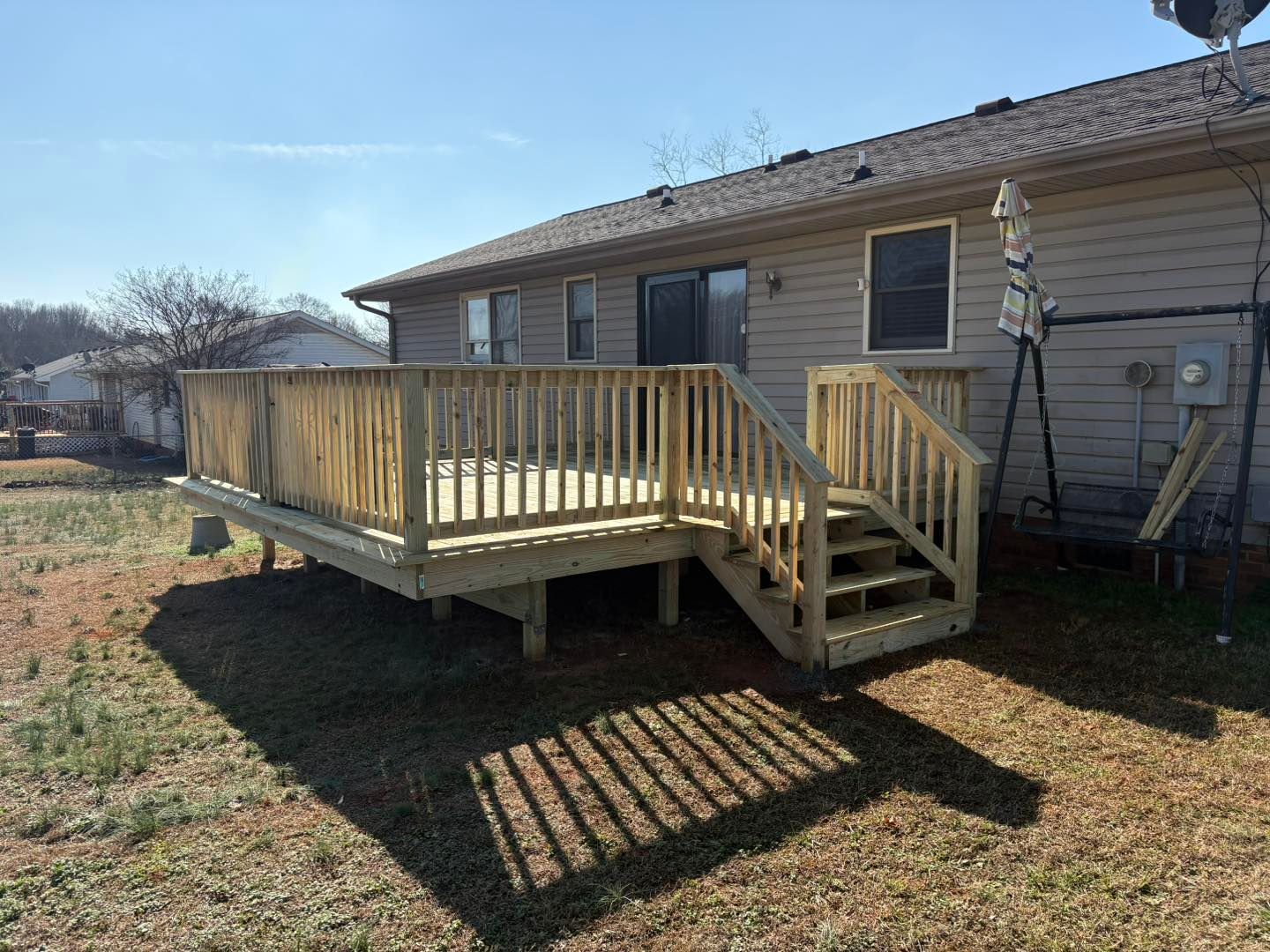
Elevated decks fail when the framing lumber rots at connection points, when joists aren't sized correctly for the span distance, or when ledger boards pull away from the house because the fasteners corrode. T&L Services builds custom cedar decks in Anderson using structural framing that accounts for load requirements, moisture management, and attachment methods that keep the deck secure to the building for decades. Cedar decking boards provide the walking surface while pressure-treated lumber forms the structural framework underneath, combining cedar's natural appearance with treated wood's ground-contact durability where posts meet soil and concrete.
This construction addresses the need for functional outdoor living space, elevated platforms that provide level areas on sloped lots, and entertainment zones that extend usable square footage beyond the house footprint. The deck framing includes proper joist spacing to prevent bounce when people walk across the surface, and flashing details that direct water away from the ledger board where the deck attaches to the building.
Schedule a backyard assessment to review elevation options and deck size configurations for your property.
Why Framing Quality Determines Deck Longevity
Deck construction starts with setting footings below the frost line to support posts that carry the beam and joist framework. The ledger board that attaches to the house must be fastened through siding into the rim joist with lag bolts or structural screws, not just nailed to exterior sheathing, because the ledger supports half the deck's weight. Joist spacing determines how much the decking flexes underfoot—sixteen-inch spacing is standard, but twelve-inch spacing reduces bounce for a more solid feel. Proper installation includes joist hangers at every connection, galvanized fasteners that resist corrosion, and blocking between joists to prevent twisting.
Once T&L Services completes the deck, you'll notice a stable surface without excessive flex, railing systems that meet code height requirements and can withstand outward pressure, and stair treads that are uniform in height so there's no tripping hazard. Cedar decking boards weather to a silver-gray patina naturally, or you can maintain the original color with annual applications of transparent sealant that penetrates the wood rather than forming a surface film. The deck remains securely attached to the house even during high winds because the ledger connection is properly flashed and fastened to structural framing rather than just exterior trim.
Custom deck designs accommodate door locations, window placements, and yard features like existing trees or utility equipment. Ground-level decks provide accessible outdoor spaces without stairs, while elevated designs create usable area over sloped terrain or provide clearance for basement walkouts. Finishing details include routed board edges to prevent splinters, countersunk fasteners that sit flush with the deck surface, and post caps that shed water away from the end grain.
Common Questions About This Service
Cedar deck projects in Anderson involve decisions about structural design, material grades, and construction details that affect both safety and appearance.
What makes cedar a good choice for deck surfaces?
Cedar contains natural oils that resist moisture absorption and insect damage, the wood doesn't splinter as easily as pressure-treated pine, and the tight grain structure resists warping better than softer woods, which keeps the deck surface more uniform over time.
How is deck framing different from the visible decking boards?
The structural framing underneath uses pressure-treated lumber for rot resistance since it's closer to ground moisture and doesn't need to look finished, while cedar boards form the walking surface where appearance and splinter resistance matter more than chemical treatment.
Why do deck boards need spacing between them?
Gaps allow water to drain through rather than pooling on the surface, and the spacing provides room for the wood to expand during humid periods without buckling, since cedar swells slightly when it absorbs moisture from rain or morning dew.
What structural factors affect deck construction in Anderson?
Soil bearing capacity determines footing size, frost depth requires footings at least thirty inches deep, and attachment to the house must account for siding type and rim joist accessibility to create a secure ledger connection.
When should existing decks be replaced instead of repaired?
Replacement becomes necessary when the ledger board shows rot or pulls away from the house, when posts move in their footings, when joists sag or show soft spots from decay, or when the framing no longer meets current building code requirements for load capacity and railing strength.
T&L Services handles cedar deck projects throughout Anderson, from small entry platforms to large multi-level entertainment decks. Request an estimate that includes framing plans and material specifications tailored to your site conditions and usage requirements.