
Outdoor Spaces Built to Handle Years of Weather
Composite Deck Installation in Anderson for properties seeking fade-resistant outdoor spaces that require minimal upkeep
T&L Services installs composite decking systems in Anderson using Fiberon and Trex materials, both engineered to resist fading and weather damage without the maintenance demands of traditional wood. The deck is designed around how you use the space, with custom layouts that account for property layout, sun exposure, and traffic patterns. You get an outdoor area that handles rain, UV exposure, and temperature swings without cracking, splintering, or requiring annual staining.
Composite deck installation involves securing a structural frame to support the decking boards, which are then fastened using hidden clips or color-matched screws to create a smooth surface. The materials consist of wood fiber and polymer blends that resist moisture absorption, which is why composite decks do not rot or warp the way pressure-treated lumber does after repeated wet-dry cycles. Fiberon and Trex boards come with factory colorants that run through the entire plank, so surface scratches do not expose raw material underneath.
Schedule a property evaluation to review deck size, layout options, and material selections for your outdoor space.
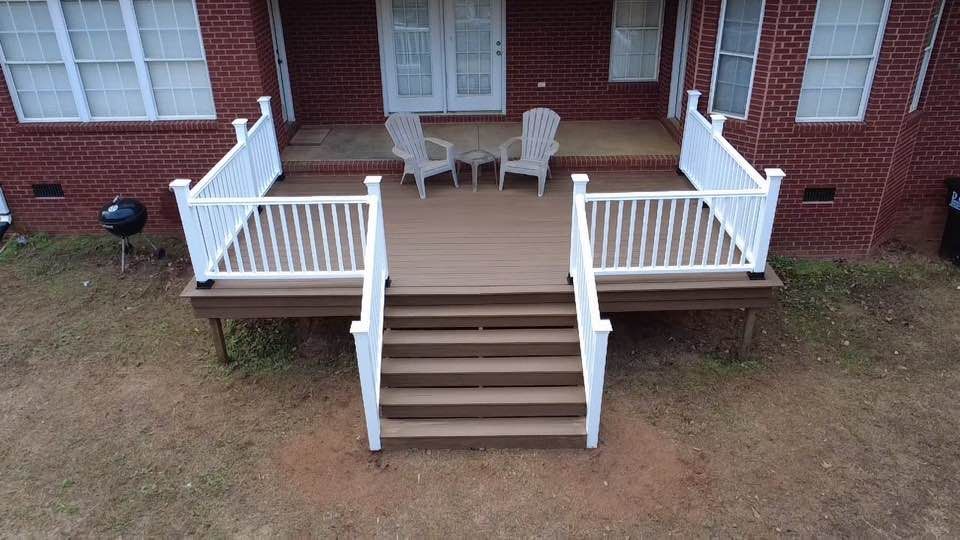
What Composite Decking Actually Accomplishes
The installation starts with grading and leveling the foundation area, then building a pressure-treated frame anchored to concrete footings below the frost line. Composite boards are laid perpendicular to the joists, with spacing calculated to allow for thermal expansion—critical in South Carolina, where surface temperatures on decks can exceed 140 degrees in summer. Hidden fastener systems lock each board into place from underneath, eliminating visible screws and creating a clean finished appearance.
Once the deck is finished, you'll notice the surface stays consistent in color even in full sun, unlike wood that grays or fades within the first season. The boards remain smooth underfoot without splintering, so walking barefoot becomes practical again. Water no longer pools in cracks or seeps into the material, which means no soft spots develop over time and mildew does not grow into the deck structure itself.
Composite decking eliminates the need for staining, sealing, or sanding, though periodic cleaning with soap and water removes dirt and pollen buildup. The material does not attract termites or carpenter bees, both of which are common issues with wood decks in the Upstate Area. Some composite lines include slip-resistant textures molded into the board surface, which matters during wet conditions or around pool areas.
Questions Before Starting Your Project
Homeowners in Anderson typically ask about durability, installation time, and maintenance requirements before moving forward with composite decking projects.
What makes Fiberon and Trex different from other composite options?
Both brands use capped composite technology, where a protective polymer shell surrounds the wood-fiber core, providing better stain resistance and fade protection than uncapped composite boards that expose the core material directly to weather.
How does the deck handle temperature changes in South Carolina?
Composite boards expand and contract with temperature swings, which is why proper spacing during installation prevents buckling—gaps are calculated based on the board length and expected temperature range in your area.
What preparation work is required before installation?
The site needs to be cleared of vegetation and graded to prevent water from pooling underneath the deck, and any necessary permits must be obtained based on deck height and proximity to property lines.
How long does a composite deck last compared to wood?
Composite decking typically lasts 25 to 30 years without structural degradation, while pressure-treated wood decks often require board replacement within 10 to 15 years due to rot and insect damage.
What ongoing maintenance does composite decking require?
You'll need to sweep off debris and wash the surface a few times each year to prevent mold from growing on pollen and dirt buildup, but no staining, sealing, or structural repairs are necessary under normal use.
T&L Services builds composite decks with structural integrity and material selections that match how you plan to use the space. Arrange an on-site consultation to discuss layout options, material colors, and project timelines specific to your property.