
Property Boundaries That Handle Weather Exposure
Pressure Treated Wood Fence Services in Anderson for residential and commercial properties requiring durable perimeter fencing
Pressure-treated lumber undergoes a chemical infusion process that forces preservatives deep into the wood fibers, creating fence components that resist rot and insect damage even when installed directly in soil. T&L Services builds custom pressure-treated fences in Anderson for property owners who need reliable boundary definition without the cost premium of naturally resistant woods like cedar. The treatment process saturates the wood with copper-based compounds that prevent fungal decay, which is why you'll see a greenish tint in freshly installed treated lumber that fades to brown-gray as the wood weathers.
This fencing approach works for properties with open exposure to weather, areas where soil stays damp, or commercial sites where budget constraints favor treated lumber over premium materials. The installation includes treated posts set in concrete, treated horizontal rails, and pickets that can be pressure-treated or standard pine depending on budget. Galvanized or coated fasteners prevent rust staining that happens when untreated screws react with the chemical preservatives in the wood.
Arrange an on-site consultation to discuss fence height regulations and gate placement for your property layout.
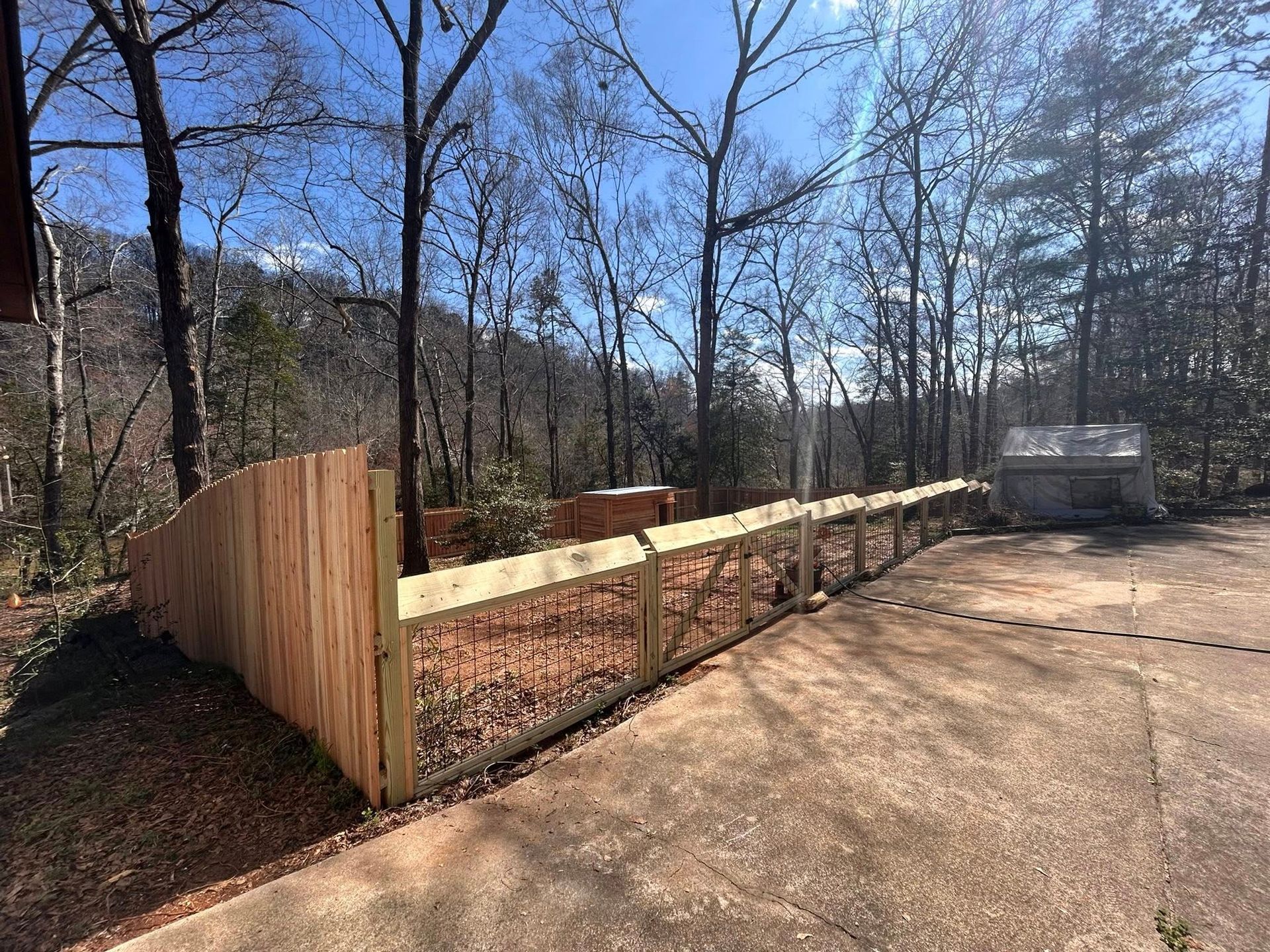
How Pressure Treatment Extends Fence Lifespan
The pressure treatment process works by placing lumber in a sealed chamber where preservatives are forced into the wood under high pressure, driving the chemicals inches deep rather than just coating the surface. This penetration means that even when the wood gets scratched or cut during installation, the interior fibers still contain preservatives that block moisture and insect activity. Treated fence posts last twenty years or more in ground contact, compared to five years or less for untreated pine posts that rot at the soil line.
After installation, the fence stands straight with no sag in the rail spans, gates swing smoothly on hinges mounted to reinforced posts, and the wood resists the soft spots that develop when untreated lumber absorbs ground moisture. You won't see the lean that happens when posts rot below grade, and pickets remain firmly attached to rails that don't deteriorate from constant wet-dry cycles. The wood does shrink slightly as it dries after installation, which is why professional builders leave expansion gaps and use ring-shank nails that resist backing out as the lumber stabilizes.
Pressure-treated fencing handles both privacy applications and open rail designs for commercial properties that need visibility with boundary definition. The material works equally well for six-foot privacy fences and four-foot split-rail enclosures. Regular inspection of gate hardware and fasteners maintains performance, since those components wear faster than the wood itself when the fence sees daily use.
Common Questions About This Service
Property owners in Anderson typically ask about treatment safety, maintenance needs, and how pressure-treated fences compare to other materials before committing to installation.
What's the difference between pressure-treated and untreated fence lumber?
Pressure treatment forces chemical preservatives deep into the wood fibers under high pressure, creating protection throughout the board rather than just on the surface, which prevents rot and insect damage even in ground contact.
How long does pressure-treated fencing last in Anderson?
Properly installed treated posts and rails typically last twenty to thirty years in the ground before structural issues develop, while untreated softwood posts rot within five to seven years in Upstate South Carolina's humid soil conditions.
Why does treated lumber have a green color that fades over time?
The copper-based preservatives used in modern pressure treatment create a green tint when fresh, but ultraviolet exposure and weathering cause the color to fade to gray-brown within the first year of outdoor exposure.
What type of fasteners work best with treated wood?
Galvanized or polymer-coated screws and nails prevent corrosion reactions with the chemical preservatives in treated lumber, while standard steel fasteners rust quickly and leave black stains that bleed down the fence boards.
When should old fences be replaced instead of repaired?
Replacement becomes necessary when posts move easily in the ground, horizontal rails show soft rot that crumbles when pressed, or the fence leans more than a few inches despite attempts to straighten and brace it.
T&L Services provides complete pressure-treated fence installations for residential yards and commercial properties throughout Anderson. Contact us to review lumber grade options and design layouts that match your property needs and usage patterns.