
Railings That Meet Code Without Compromising Design
Deck Railing Installation in Anderson for decks requiring code-compliant perimeter protection with materials that match the decking system
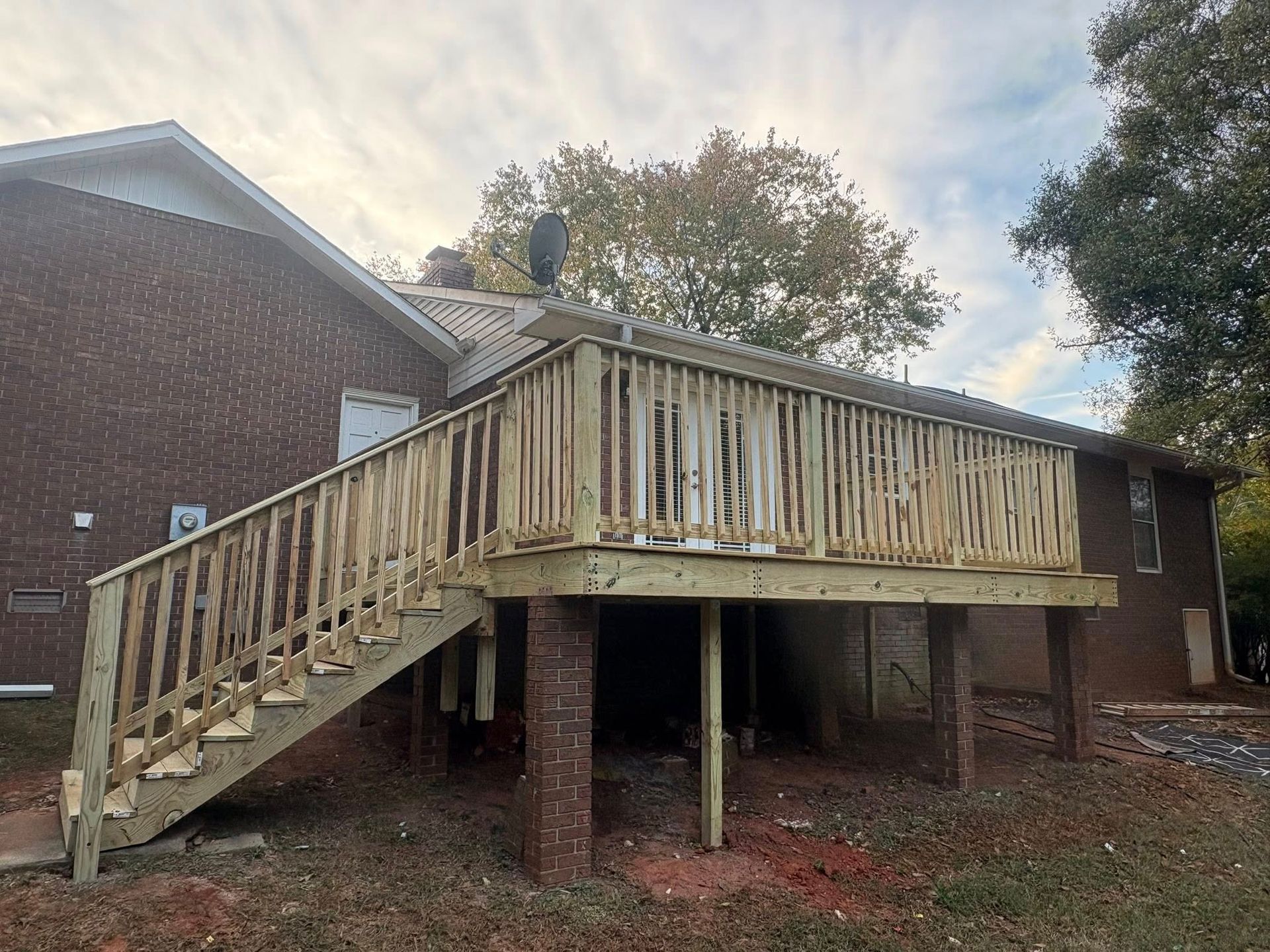
Railing systems serve two functions: keeping people from falling off elevated decks and providing something to grip when using stairs. T&L Services installs custom wood and composite railing systems in Anderson that meet building code requirements for height, baluster spacing, and structural strength while matching the visual style of your deck. The railing integrates with both new deck construction and existing structures where the original railings have deteriorated or no longer meet safety standards.
Installation involves anchoring posts to the deck frame at intervals determined by the railing material and local wind load requirements—composite railings often allow wider post spacing than wood because of the material's structural properties. Balusters must be spaced so a four-inch sphere cannot pass through, which prevents young children from slipping between rails, and the top rail must sit between 36 and 42 inches above the deck surface. Stair railings follow the same spacing rules but angle to match the stair slope, with graspable handrails that meet diameter and continuity requirements.
Arrange an on-site consultation to review railing styles, materials, and the structural requirements for your deck configuration.
What Proper Deck Railing Requires
Railing posts are through-bolted to the rim joist or blocking using carriage bolts, not just screwed to the surface, because the railing must withstand a 200-pound lateral load applied at any point along the top rail. Composite railing systems often use aluminum posts sleeved with composite covers, which provides the strength needed to meet code while maintaining a consistent appearance with the decking material. Decorative styles include vertical balusters, horizontal cable rails, or glass panel inserts, each with different installation methods and maintenance considerations.
Once the railing is installed, the deck perimeter becomes secure for children and pets, and you can lean against the top rail without feeling flex or movement. Stair railings provide stable support when carrying items up and down, reducing the risk of slips on wet or angled surfaces. Composite railings will not splinter when gripped, which makes them practical for barefoot use, and the color stays consistent without requiring the stain touch-ups that wood railings need every few years.
Railing upgrades on existing decks sometimes reveal that the rim joist or blocking is too deteriorated to hold fasteners securely, which requires structural reinforcement before the new railing can be anchored. Some designs incorporate lighting into post caps or under the top rail, which adds visibility for nighttime use but requires running low-voltage wiring during installation.
Common Questions About This Service
Homeowners often ask about code requirements, material choices, and how railing installation affects deck usability before scheduling the work.
What building code rules apply to deck railings in Anderson?
Decks elevated more than 30 inches above grade require railings, and all railings must meet height, spacing, and load requirements defined in the International Residential Code, which South Carolina has adopted with minor local amendments.
How do composite railings compare to wood in durability?
Composite railings resist moisture damage and insect activity, so they do not rot or develop the loose joints that occur in wood railings after years of wet-dry cycles, though they cost more upfront than pressure-treated wood options.
What railing style works best for stair safety?
Stair railings should include a graspable handrail that runs continuously from the top to the bottom of the stairs without interruption, which provides consistent support and meets code requirements for stair safety.
Can you add railing to a deck that was built without it?
Yes, as long as the deck frame includes solid rim joists or blocking to anchor the railing posts—if the edge framing is damaged or undersized, it needs reinforcement before railing installation can proceed.
How does railing installation affect the deck timeline?
Railing typically adds one to two days to a deck project depending on the perimeter length and stair configuration, since each post must be positioned, fastened, and checked for plumb before the rails and balusters are installed.
T&L Services installs railing systems that meet structural requirements and integrate with your deck design. Request a consultation to discuss material options and the specific code requirements for your property's deck height and layout.